
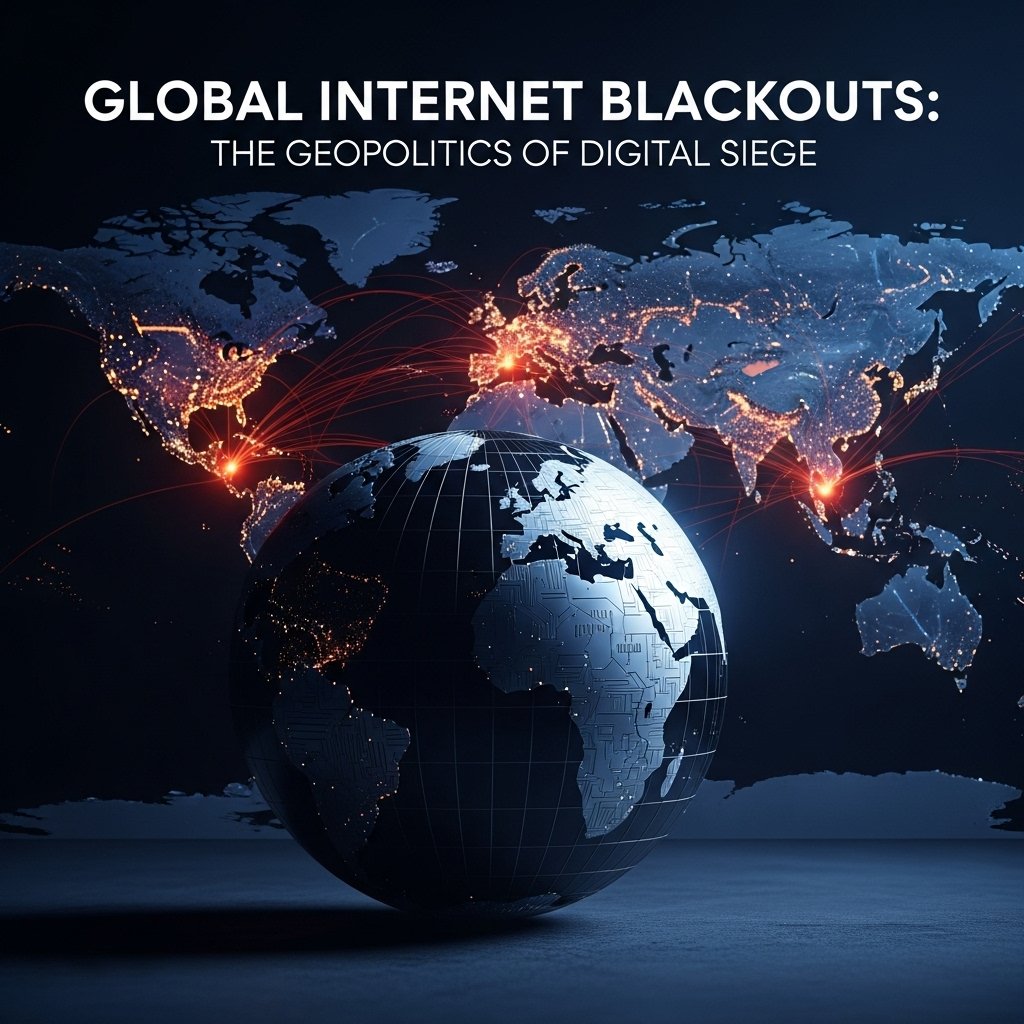
In the contemporary landscape of international relations, the internet has evolved from a decentralized network of communication into a contested domain of state sovereignty and control. The phenomenon of Global Internet Blackouts—deliberate, state-sponsored disruptions of digital connectivity—has transitioned from an anomaly to a standard instrument of political leverage. As of early 2026, the normalization of these digital sieges represents a profound shift in the relationship between the state, the citizen, and the global economy. This article examines the strategic logic behind these shutdowns, their devastating economic repercussions, and the eroding framework of international human rights law designed to prevent them.
The Rise of Digital Authoritarianism
The trajectory of internet shutdowns has followed a disturbing upward curve. While once reserved for extreme crises, digital blackouts are now routinely deployed to preempt dissent, manage electoral outcomes, and obscure human rights abuses. The underlying logic is one of “information sovereignty,” a doctrine where the state asserts absolute authority over the flow of data within its borders. This is not merely censorship; it is the weaponization of infrastructure.
Recent data underscores the severity of this trend. In 2024 alone, the #KeepItOn coalition documented a record 296 shutdowns across 54 countries, a significant escalation from previous years. This surge was not limited to authoritarian regimes; democracies have increasingly resorted to localized shutdowns under the guise of maintaining public order or preventing examination cheating. However, the most severe instances remain tied to political instability. For example, the recurring blackouts in nations like Myanmar and Iran serve as a digital curtain, drawn to hide state violence from the international community.
The strategic value of a blackout lies in its asymmetry. By severing connectivity, the state retains its internal command-and-control capabilities—often through secure intranets—while the populace is rendered atomized and blind. In conflict zones such as Tigray (Ethiopia) or Gaza, this isolation prevents the documentation of war crimes, effectively silencing the victims before they can speak.
Economic Hemorrhage: The Global Cost of Silence
Beyond the immediate political suppression, global internet blackouts exact a staggering financial toll. The digital economy is not a separate entity but the nervous system of modern commerce. When the internet goes dark, supply chains fracture, banking systems freeze, and the gig economy—often a lifeline in developing nations—evaporates.
Economic impact assessments paint a grim picture. According to the Global Cost of Internet Shutdowns report, the world economy lost approximately $7.69 billion in 2024 due to government-imposed disruptions. These figures, however, likely underestimate the true cost. They calculate direct losses in GDP and productivity but fail to capture the long-term erosion of investor confidence. Foreign Direct Investment (FDI) relies heavily on stability; a country that arbitrarily toggles its internet switch is viewed as a high-risk environment. For emerging economies seeking to integrate into the global digital market, this policy is tantamount to economic self-sabotage.
Consider the case of India, which has frequently topped the list for the highest number of shutdowns. While often localized to specific regions like Manipur or Kashmir, the cumulative economic drag runs into the billions. Small businesses dependent on WhatsApp for orders, students relying on remote learning, and hospitals needing telemedicine services bear the brunt of these decisions. The macroeconomic reality is that internet access is a prerequisite for development; severing it is a regression.
The Mechanics of Disconnection
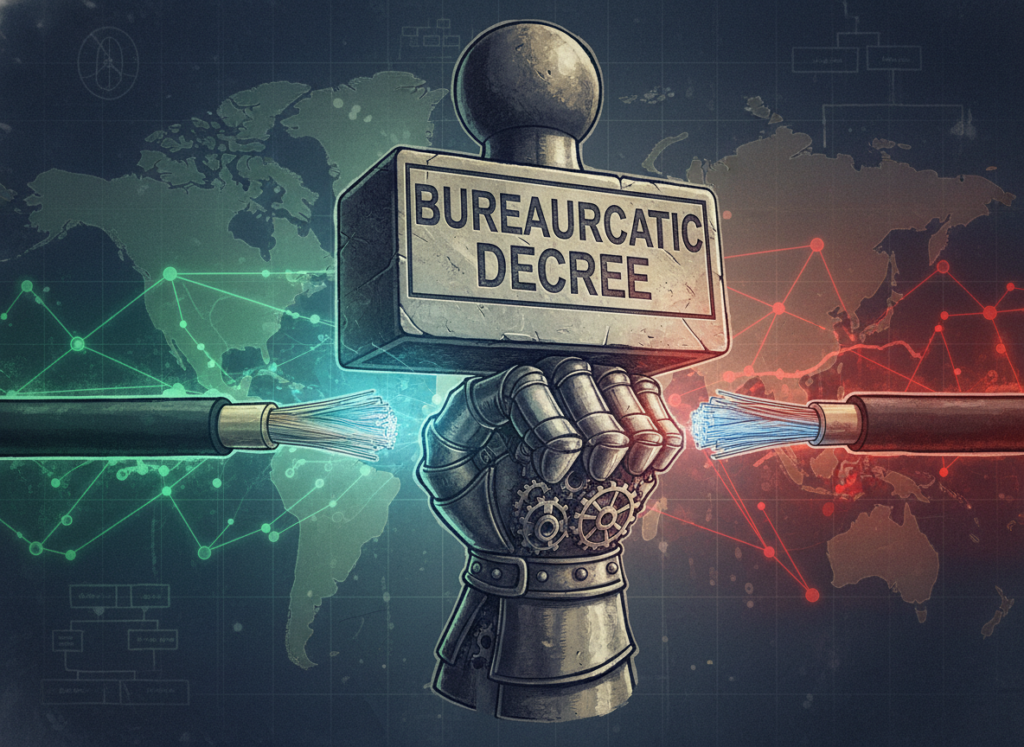
To understand the efficacy of global internet blackouts, one must understand the technical mechanisms employed by states. A “kill switch” is rarely a single button; rather, it is a suite of protocols and pressure points applied to Internet Service Providers (ISPs).
BGP Hijacking and DNS Tampering
At a sophisticated level, governments can manipulate the Border Gateway Protocol (BGP), the routing system that directs traffic across the internet. By forcing ISPs to withdraw BGP prefixes, a country effectively removes itself from the global routing table, making its IP addresses unreachable from the outside world. Similarly, tampering with Domain Name System (DNS) servers can render specific websites or social media platforms inaccessible, a tactic often used for “partial” shutdowns or throttling.
Physical Infrastructure Sabotage
In more blunt scenarios, the disruption is physical. Authorities may order telecommunications companies to power down cell towers or sever fiber-optic cables. This was evident in the conflict-driven blackouts in Sudan, where the physical destruction of infrastructure by warring factions made restoration nearly impossible. The centralization of internet infrastructure—where a few key gateways control a nation’s entire bandwidth—makes these physical choke points dangerously easy to exploit.
International Law and the Human Rights Deficit
The legality of internet shutdowns is a subject of intense debate within international law. The United Nations has been unequivocal in its stance. In a landmark report, the Office of the High Commissioner for Human Rights (OHCHR) declared that internet shutdowns rarely meet the threshold of necessity and proportionality required under international human rights law. Access to the internet is increasingly viewed as an enabler of other fundamental rights, including freedom of expression, assembly, and access to healthcare.
Despite this, enforcement mechanisms remain weak. State sovereignty often trumps international condemnation. While resolutions by the UN Human Rights Council carry normative weight, they lack the punitive teeth to deter regimes committed to digital repression. The legal argument often advanced by states—that shutdowns are necessary for “national security” or “public order”—is frequently a cover for political survival. The lack of a binding international treaty specifically governing digital access allows this impunity to persist.
Furthermore, the complicity of the private sector cannot be ignored. Telecommunications companies, often multinational corporations, find themselves in a legal quagmire, forced to comply with local laws mandating shutdowns or risk losing their operating licenses. This tension between corporate responsibility and local compliance is a defining struggle of the digital age.
Future Outlook: The Fragmented Web
As we move further into the decade, the threat of global internet blackouts suggests a grim future for the “World Wide Web.” We are drifting away from a singular, interoperable internet toward a “Splinternet”—a collection of national intranets bordered by digital firewalls. Countries like Russia and Iran have already tested “sovereign internet” capabilities, designed to function independently of the global grid.
If this trend continues, the global internet blackout will no longer be an event but a permanent state of affairs for millions. The international community must prioritize digital rights in diplomatic negotiations and trade agreements, treating internet access not as a luxury, but as vital infrastructure for the modern world. Until the political cost of disconnection outweighs the benefits of control, the screen will remain dark for far too many.