
The Dow Jones Industrial Average Surpasses 50,000: A Historic Financial Milestone
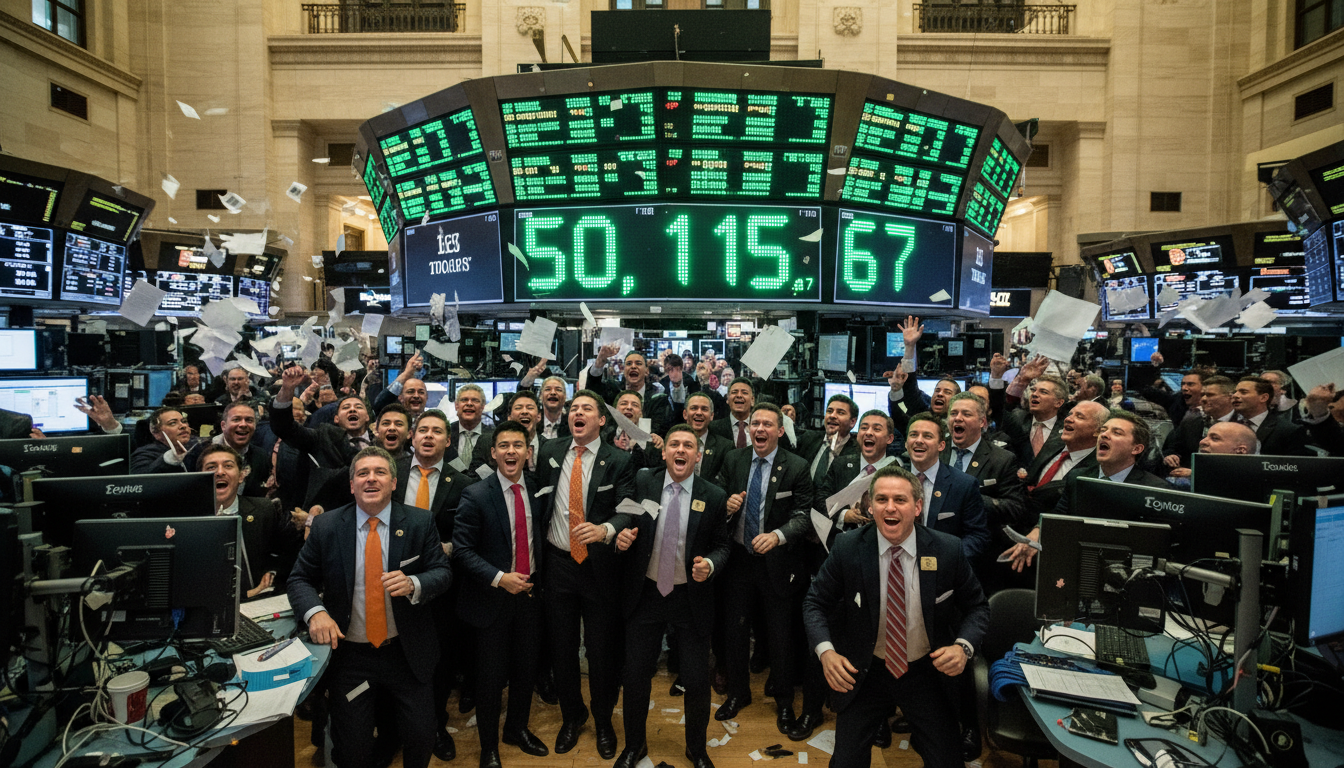
On February 6, 2026, the Dow Jones Industrial Average (DJIA) etched a new chapter in financial history, closing above the 50,000 mark for the first time. Finishing the trading session at 50,115.67, the blue-chip index surged more than 1,200 points, or 2.5%, in a single day. This achievement represents more than just a psychological victory for bulls; it signals a profound shift in market dynamics, characterized by a broadening rally that extends well beyond the technology sector that dominated the first half of the decade.
The Dow 50,000 milestone arrives amidst a complex economic backdrop. Following a week of volatility triggered by concerns over aggressive artificial intelligence (AI) capital expenditures—most notably Amazon’s announced $200 billion spending plan—investors rotated back into quality, economically sensitive stocks. This pivot has underscored the resilience of the U.S. economy and the enduring appeal of established industrial and financial giants.
Market Drivers Fueling the Ascent
The climb to 50,000 was not linear, nor was it driven by a single catalyst. Instead, a confluence of monetary policy, corporate earnings, and sector rotation provided the necessary momentum to breach this historic resistance level.
The Broadening of the Bull Market
For much of 2024 and 2025, market gains were disproportionately concentrated within the “Magnificent Seven” tech behemoths. However, the path to Dow 50,000 has been paved by a significantly wider array of contributors. As noted by market strategists, the recent rally reflects a healthy diversification of risk. Investors are increasingly allocating capital to sectors that benefit from infrastructure development, domestic manufacturing, and stabilized consumer spending.
Notably, industrial heavyweights like Caterpillar (CAT) and financial leaders such as Goldman Sachs (GS) played pivotal roles in the final push toward 50,000. Caterpillar’s stock, for instance, surged over 7% on the milestone day, buoyed by robust earnings and renewed confidence in global construction demand. This rotation suggests that the market is no longer solely reliant on speculative tech valuations but is finding support in the tangible economy.
Monetary Policy and Economic Resilience
The Federal Reserve’s management of interest rates remains a cornerstone of this bull market. After successfully navigating the inflationary pressures of the early 2020s, the central bank’s pivot toward a more accommodating monetary stance in late 2025 and early 2026 has reduced the cost of capital for corporate America.
According to data from the Federal Reserve, the stabilization of inflation rates near the 2% target has allowed for a predictable easing cycle. This policy environment has been particularly beneficial for the Dow’s constituents, many of which are capital-intensive businesses that thrive in low-rate environments. The expectation of continued rate cuts through 2026 has further emboldened equity investors, effectively putting a floor under stock prices during periods of short-term volatility.
Historical Context: The Road from 40,000 to 50,000
To understand the significance of the Dow 50,000 milestone, one must look at the velocity of the index’s recent history. The Dow first crossed 40,000 in May 2024. The journey from 40,000 to 50,000 took approximately 21 months—a testament to the market’s explosive energy despite geopolitical tensions and intermittent fears of recession.
Comparing this to previous eras offers valuable perspective:
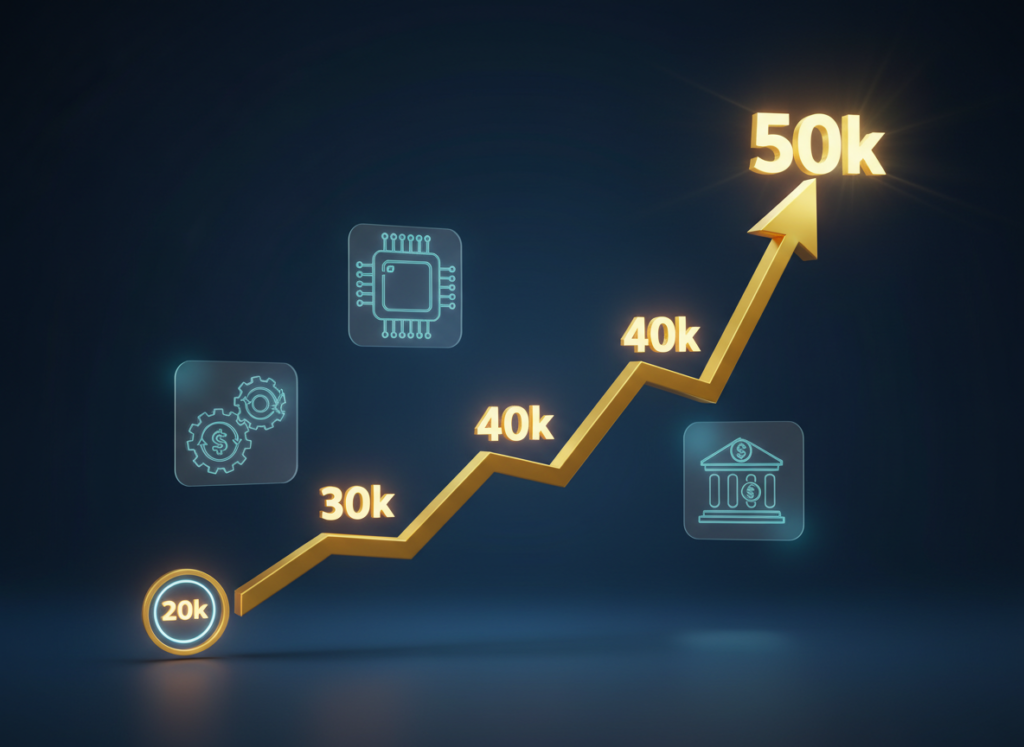
- 10,000 to 20,000: Took nearly 18 years (1999–2017).
- 20,000 to 30,000: Took roughly 4 years (2017–2020).
- 30,000 to 40,000: Took about 3.5 years (2020–2024).
- 40,000 to 50,000: Accomplished in under 2 years (2024–2026).
This acceleration highlights the compounding effect of corporate earnings growth and the increasing speed of information flow in modern markets. However, it also raises questions about valuation sustainability. While the pace is rapid, analysts at major firms like Morgan Stanley have pointed out that price-to-earnings ratios for the broader Dow 30 are not as stretched as they were during the Dot-com bubble, suggesting that earnings growth has largely kept pace with price appreciation.
Sector Analysis: Beyond the Tech Boom
While technology remains a critical component of the U.S. economy, the Dow 50,000 narrative is defined by the resurgence of “Old Economy” sectors.
The Industrial Renaissance
The industrial sector has outperformed significantly in the lead-up to this milestone. Companies involved in automation, energy transition, and defense have seen their order books swell. The renewed focus on domestic supply chains—often termed “onshoring”—has benefitted Dow stalwarts that manufacture physical goods. This trend is expected to persist as both public and private investment flows into upgrading America’s aging infrastructure.
Financials and Consumer Strength
Financial stocks have also enjoyed a tailwind from a steepening yield curve and revived deal-making activity. With the economy avoiding the widely predicted hard landing, loan defaults remain manageable, and consumer spending has proven remarkably resilient. Retailers within the index have adapted to changing consumer preferences, leveraging AI for inventory management while maintaining their brick-and-mortar strongholds.
Analyst Outlooks and Future Projections
With the 50,000 barrier broken, the question on every investor’s mind is: What comes next?
Market sentiment is currently a mix of jubilation and caution. The “Instability” theme, popularized by strategists at Charles Schwab, suggests that while the directional trend is upward, investors should brace for heightened volatility. The rapid ascent to 50,000 may invite a period of consolidation or profit-taking as the market digests these gains.
Most institutional forecasts for the remainder of 2026 remain cautiously optimistic. Key factors to watch include:
- AI Monetization: Can tech giants prove that their massive capital expenditures will yield proportionate profits?
- Global Trade Dynamics: How will evolving trade frameworks, particularly with emerging markets like India, influence multinational revenue streams?
- Inflationary shocks: Will the Fed be able to maintain its easing path if commodity prices spike?
In conclusion, the Dow 50,000 milestone is a validation of the American corporate engine’s adaptability. It marks the transition from a recovery-focused market to one driven by innovation and structural growth. While risks remain, the broadening participation of diverse sectors provides a sturdier foundation for the index than in previous, tech-concentrated rallies.