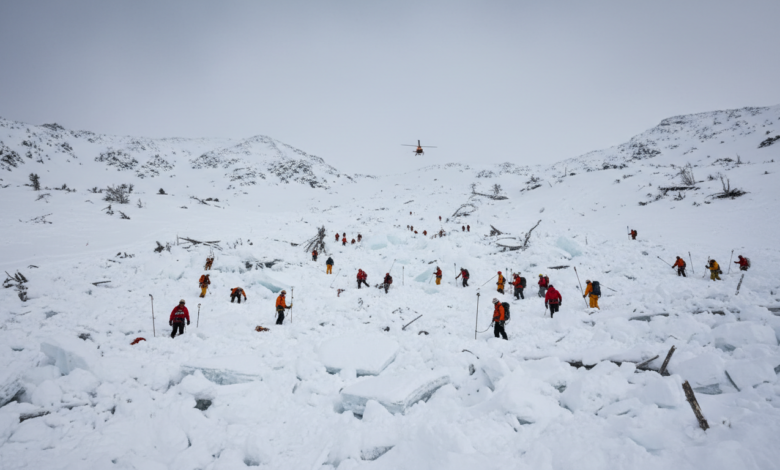
A catastrophic event has struck the Sierra Nevada mountains, marking one of the deadliest days in California skiing history. Search and rescue teams have recovered the bodies of eight skiers following a massive Lake Tahoe avalanche that buried a backcountry group earlier today. As night falls, operations continue with desperate urgency to locate one person who remains missing among the debris.
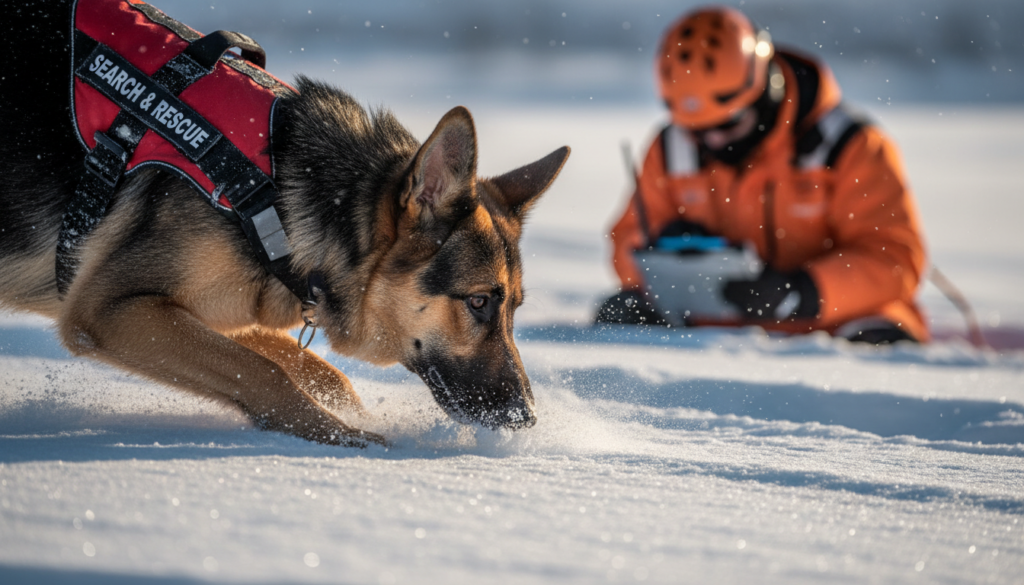
Authorities report that the slide occurred in a high-risk backcountry zone near the Palisades Tahoe area, though outside the resort boundaries. The sheer volume of snow displaced has complicated recovery efforts, with rescue dogs and thermal drones deployed to scan the unstable terrain. This tragedy serves as a grim reminder of nature’s unpredictability, even as the region enjoys a season of record snowfall.
Family members and the local community are reeling from the shock. Sheriff’s deputies and emergency personnel from across the state have converged on the scene. We will update this report as more information regarding the Lake Tahoe avalanche becomes available.
The Timeline of the Disaster
The incident began shortly after 9:00 AM local time. Witnesses reported a loud crack echoing through the canyon, followed by a cloud of powder that engulfed the slope in seconds. The group of skiers, believed to be experienced backcountry enthusiasts, was traversing a ridge when the snowpack gave way. Reports from BBC US & Canada indicate that avalanche conditions were rated as ‘High’ earlier that morning due to recent heavy storms.
First responders arrived within minutes of the distress call, but the scale of the slide made immediate access difficult. By noon, teams had located five victims. As the afternoon progressed, three more bodies were recovered. The search for the final member of the group is ongoing, though fading light and the risk of secondary slides are hampering efforts. This event has drawn attention from global media, including coverage from CNN regarding the severity of this winter’s weather patterns.
Search and Rescue Operations
The response to this Lake Tahoe avalanche has been massive. Agencies from Placer County, Washoe County, and federal rescue units are collaborating on the ground. Advanced technology is playing a vital role in the operation. Crews are utilizing Recco detectors and avalanche transceivers to pinpoint signals under feet of compacted snow.
Medical helicopters are on standby, though the window for survival is closing rapidly. According to experts in health and hypothermia, the first 15 minutes are vital for avalanche victims. As time passes, the likelihood of survival drops precipitously due to asphyxiation and cold exposure. The coordinated effort highlights the bravery of first responders who put their own lives at risk to save others.
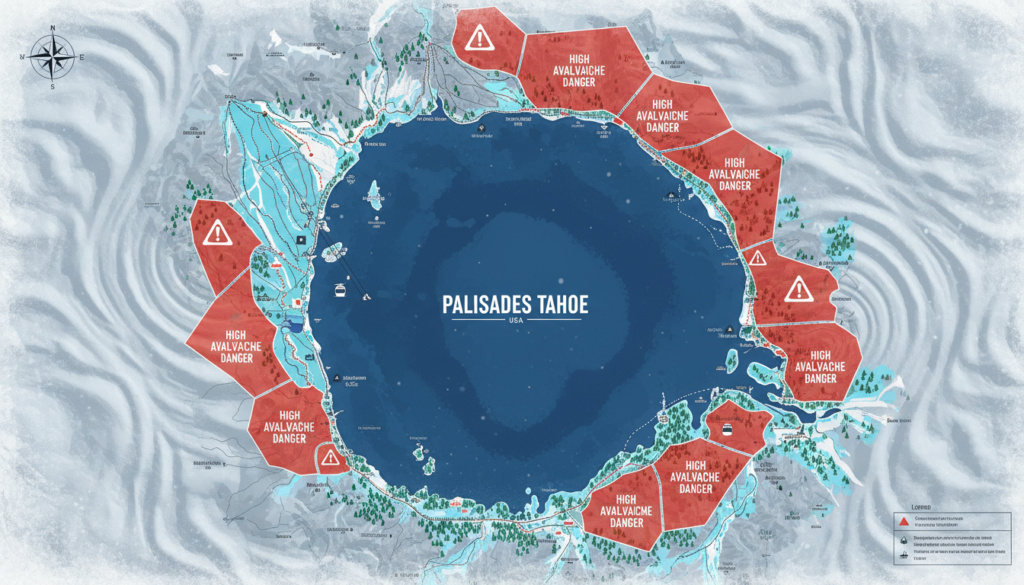
Lake Tahoe Avalanche Danger Levels Explained
Understanding why this happened requires looking at the snow science. The science and environment desk notes that the region recently experienced a ‘loading event’—rapid accumulation of heavy snow on top of a weak, persistent layer. This creates a fragile slab waiting for a trigger. In this case, the weight of the skiers likely fractured the weak layer, releasing the slab.
Local authorities often issue warnings, and the Sierra Avalanche Center (a key resource often cited by .gov agencies) had flagged the area as dangerous. Despite these warnings, the allure of fresh powder often draws skiers into unpatrolled territory. This specific Lake Tahoe avalanche was classified as a D4 slide, capable of destroying large areas of forest and burying cars.
Impact on the Local Economy and Resorts
While this tragedy occurred in the backcountry, the ripple effects are being felt by the local business community. Ski resorts in the area may face stricter regulations or temporary closures to perform avalanche mitigation work. The tourism industry, which relies heavily on the perception of safety, often sees a dip in visitors following high-profile disasters.
Travelers planning trips to the region should check the latest travel advisories. Roads may be closed to facilitate emergency vehicles, and backcountry access points are likely to be cordoned off for investigation. The economic impact is secondary to the loss of life, but it remains a significant concern for the region.
The Sporting Community Mourns
The skiing world is tight-knit, and the loss of eight individuals is a heavy blow. Tributes are pouring in from professional athletes and organizations. The sport of backcountry skiing carries inherent risks, yet it remains popular for the solitude and connection with nature it provides. This incident will likely spark renewed conversations about safety gear and decision-making protocols.
Critical Safety Information
For those venturing into the mountains, preparedness is non-negotiable. Experts emphasize carrying a beacon, shovel, and probe at all times. Taking an avalanche safety course (AIARE 1) is vital. Never ski alone and always check the forecast. The sheer power of Earth and its natural forces must be respected. Ignoring warning signs can lead to fatal consequences, as seen in today’s heartbreaking event.
According to Reuters, state officials are considering mandatory safety certifications for accessing certain public lands during high-danger periods. This potential policy shift aims to prevent future mass casualty events.
What This Means for the Season
As the search for the final missing skier continues into the night, the focus shifts to supporting the grieving families. The Lake Tahoe avalanche will go down as a dark chapter in the 2026 winter season. Authorities urge the public to stay away from the area to allow rescue teams to work unimpeded.
We will continue to monitor the situation. For broader context on global weather events affecting mountain regions, follow our main news feed. The coming days will bring answers about the exact cause and the identities of the victims, but for now, the community stands united in sorrow.
Key Takeaways
- Casualties: 8 confirmed dead, 1 missing.
- Location: Backcountry near Lake Tahoe, California.
- Cause: Unstable snowpack triggered a massive slab avalanche.
- Status: Search ongoing for the final victim.
- Advisory: Avoid backcountry travel in the region until further notice.