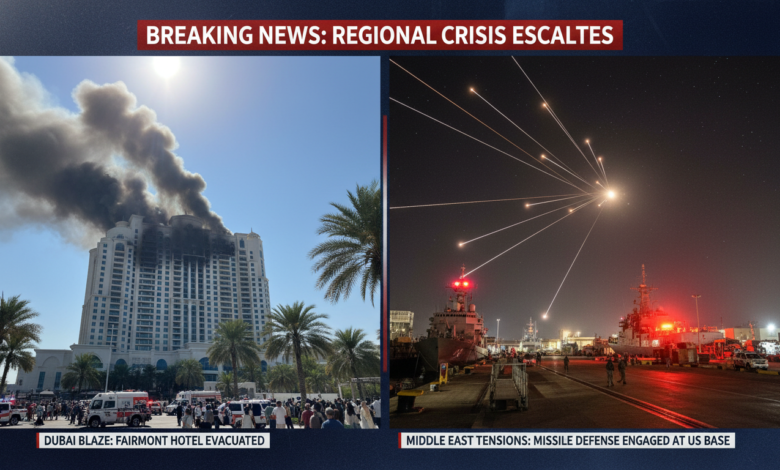
The conflict in the Middle East has dangerously expanded beyond the initial theater of war, shattering the calm of the Gulf’s most prominent cities. In a significant escalation of hostilities on March 1, 2026, reports confirmed missile strikes targeting the luxury Fairmont Hotel in Dubai and the US Naval Support Activity in Bahrain.
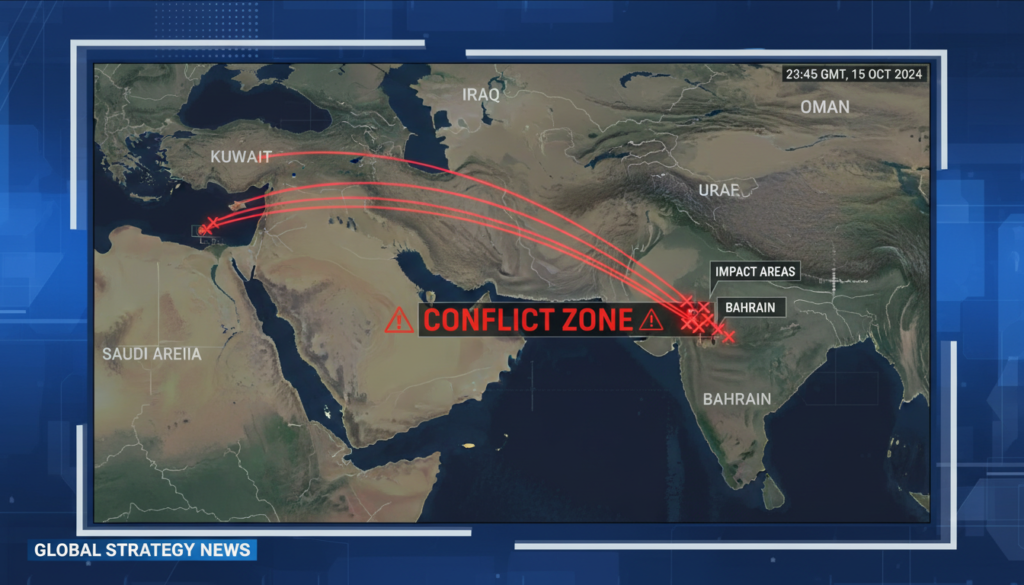
Smoke was seen billowing from the Palm Jumeirah skyline early Sunday morning as emergency services rushed to the scene. Simultaneously, sirens wailed across the Juffair district in Manama, Bahrain, as American defense systems engaged incoming projectiles targeting the US Navy’s 5th Fleet headquarters. This coordinated assault marks a direct retaliation following the joint US-Israel aerial campaign against Tehran just 24 hours prior.
The Dubai Bahrain missile strikes have sent shockwaves through global markets and diplomatic channels, signaling that the containment of this war is no longer possible. Authorities in the United Arab Emirates and Bahrain have declared states of emergency in affected districts, while Washington scrambles to assess the damage to its strategic assets in the region.
The Attack on Dubai: Tourism Hub Under Fire
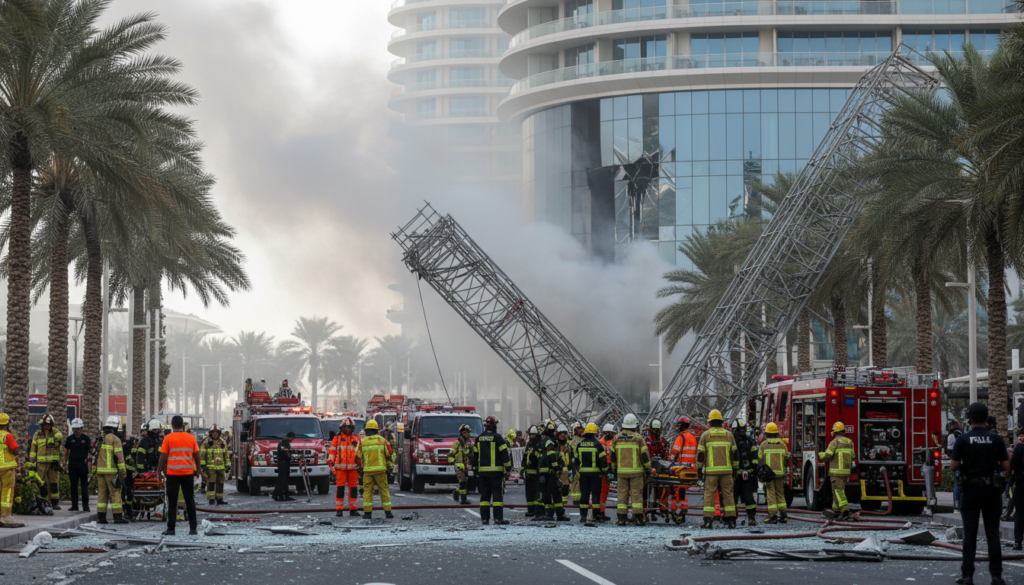
Dubai, long considered a sanctuary of stability in a volatile region, woke up to the sounds of explosions ripping through the Palm Jumeirah archipelago. The Fairmont The Palm, a five-star resort favored by international tourists, sustained a direct hit to its upper facade. Witness footage shared on social media shows debris raining down on the pool deck and thick black smoke obscuring the iconic Atlantis hotel in the distance.
Dubai Civil Defense teams managed to control the blaze within two hours, but the psychological impact on the emirate is profound. Authorities confirmed four injuries, primarily from shattered glass and falling debris, though no fatalities have been reported as of Sunday noon. The Dubai Media Office issued a statement urging residents to stay away from coastal windows and avoid the Palm area while structural integrity checks are underway.
Panic in Paradise
Tourists described scenes of chaos as alarms sounded shortly after dawn. “The whole building shook,” said Sarah Jenkins, a British national staying at a nearby resort. “We ran to the lobby, and you could see the fire at the Fairmont. It doesn’t feel real.” This incident threatens the vital tourism economy that defines the emirate, raising questions about the safety of other luxury destinations across the UAE.
Escalation in Bahrain: US 5th Fleet Targeted
While Dubai faced attacks on civilian infrastructure, the strike on Bahrain was a calculated military offensive. The Juffair district, home to the US Naval Support Activity Bahrain, came under a barrage of ballistic missiles. This base hosts the US Navy’s 5th Fleet and is the linchpin of American maritime power in the Persian Gulf.
According to the U.S. Department of Defense, defensive batteries—likely Patriot and THAAD systems—intercepted the majority of the incoming threats. However, falling shrapnel and at least one impact near the perimeter wall caused localized damage. Evacuation orders were immediately issued for American personnel and their families living in the surrounding high-rise apartments.
Bahrain’s Ministry of Interior reported that shrapnel damaged several civilian vehicles and residential buildings in Manama, but the primary target was unmistakably American military infrastructure. This direct engagement between Iranian-launched capabilities and US forces on Bahraini soil represents a red line that many analysts feared would be crossed.
Regional Fallout: The Conflict Expands
The Dubai Bahrain missile strikes have forced neighboring Gulf Cooperation Council (GCC) states to rapid action. Saudi Arabia and Kuwait have closed portions of their airspace, grounding commercial flights and leaving thousands of passengers stranded. The seamless connectivity that defines Gulf aviation is currently paralyzed, with major carriers suspending operations indefinitely.
Political leaders are convening emergency summits. The expansion of the war into the UAE and Bahrain drags the entire Arabian Peninsula into the fray. Observers note that this retaliation was predictable following the aggressive stance taken by Western powers, a subject of intense debate in recent politics coverage. The grim reality is that the “proxy war” phase has ended; sovereign territories are now active battlegrounds.
Economic Shockwaves
Global financial markets reacted instantly to the news. Oil prices spiked by 12% in Asian trading hours, reaching levels not seen since the early 2020s. Investors fear that the Strait of Hormuz could be the next focal point, potentially choking off a significant percentage of the world’s oil supply.
Analysts in the business sector warn that prolonged instability in the Gulf could trigger a global recession. Insurance premiums for shipping vessels entering the Persian Gulf have skyrocketed, effectively halting non-essential maritime traffic. Those tracking investing trends advise extreme caution as volatility grips the energy sector.
Analysis: A War Without Borders
The precision and range of the attacks on Dubai and Bahrain demonstrate a significant leap in offensive capabilities. By targeting the Fairmont, the message is clear: no safe havens remain. By targeting the 5th Fleet, the adversary is challenging US hegemony directly.
Experts contributing to our opinion column suggest that these strikes are intended to fracture the US-GCC alliance, pressuring Gulf states to distance themselves from Washington to avoid further destruction. However, the immediate result appears to be a hardening of defenses and a unification of military command structures among the allies.
Travel advisories have been updated globally. The US State Department and UK Foreign Office now advise against all travel to the UAE and Bahrain. This deals a severe blow to the travel industry, which was forecasting a record year for the region.
What This Means for the World
The situation remains fluid. The Americas desk reports that the White House is preparing a statement, likely outlining a “severe and disproportionate” response. Meanwhile, World leaders from Europe to Asia are calling for immediate de-escalation, though the window for diplomacy seems to be closing rapidly.
Residents in Dubai and Manama face an uncertain night. The illusion of distance from the conflict has vanished. As detailed in reports from Reuters, regional defense systems remain on high alert, anticipating further waves of attacks. The events of March 1, 2026, will likely be remembered as the day the Gulf War of this generation truly began.
For ongoing coverage of the energy crisis, read our latest updates on Bloomberg.