
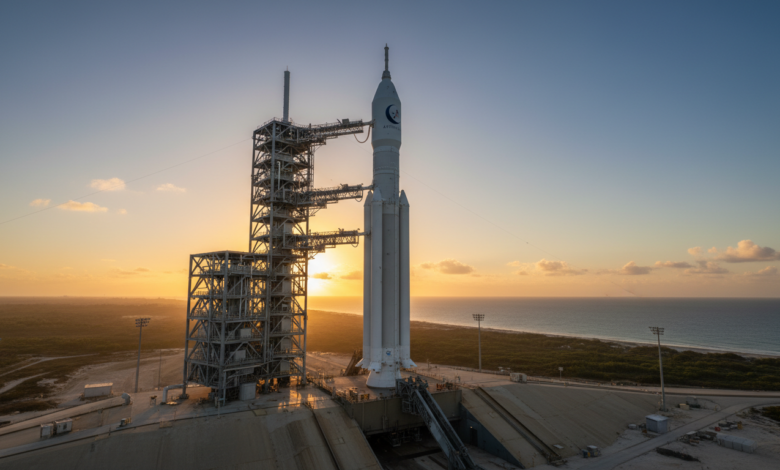
History is on the launchpad. As of March 6, 2026, humanity stands weeks away from returning to deep space. The Artemis II mission, the first crewed lunar endeavor since Apollo 17 in 1972, has officially entered its final preparation phase. NASA and the Canadian Space Agency (CSA) confirmed this morning that the Space Launch System (SLS) and the Orion spacecraft are tracking perfectly for the targeted launch window next month. This isn’t merely a test; it represents a monumental shift in how we approach our solar system. The four-person crew—Commander Reid Wiseman, Pilot Victor Glover, and Mission Specialists Christina Koch and Jeremy Hansen—has begun final quarantine protocols, signaling that the countdown is real.
The atmosphere at Kennedy Space Center is electric. Engineers are conducting the last closeout inspections, and the world is watching. This mission will send four astronauts on a 10-day journey around the Moon to test the Orion spacecraft’s life-support systems. If successful, it paves the way for landing boots on the lunar surface later this decade. We examine the latest status updates, the technology powering this journey, and what to expect when the engines ignite in April.
Key Takeaways
- Launch Date: Targeted for April 2026.
- Crew Status: Wiseman, Glover, Koch, and Hansen have entered pre-flight medical quarantine.
- Vehicle Readiness: SLS Block 1 and Orion capsule have passed final integrated systems tests.
- Mission Goal: A 10-day lunar flyby to validate life support and communication systems.
The Artemis II Mission Profile: Returning to Deep Space
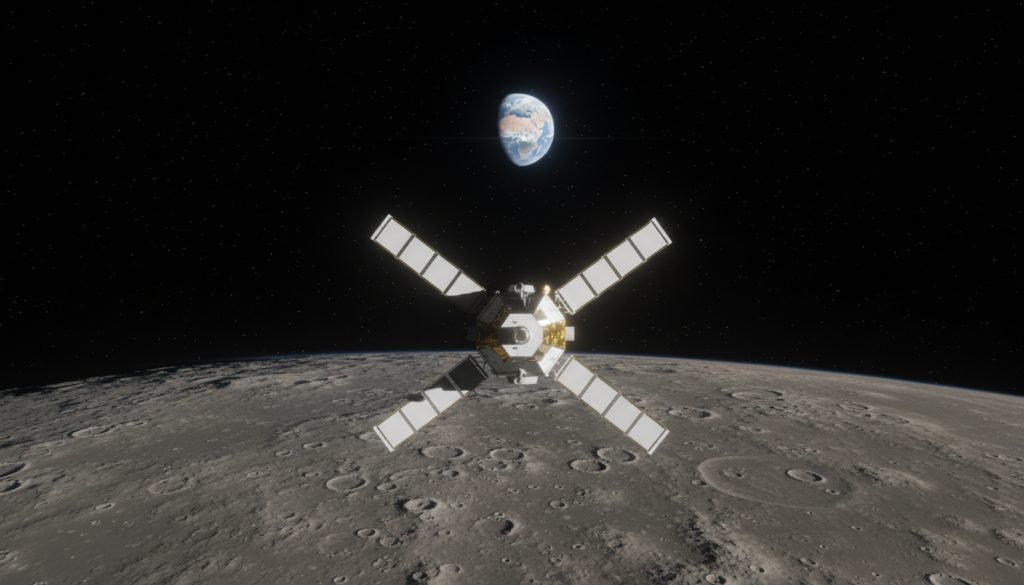
The Artemis II mission is designed to execute a hybrid free-return trajectory. Unlike a landing mission, this flight path uses Earth’s gravity to pull the spacecraft back home after looping around the Moon. This profile minimizes fuel consumption and ensures the crew can return safely even if the main engine fails after the translunar injection burn. It serves as the ultimate shakedown cruise for the Orion capsule.
Recent developments in science and engineering have allowed NASA to refine this trajectory to maximize safety while gathering essential data on radiation exposure. The spacecraft will travel approximately 6,400 miles beyond the far side of the Moon, taking humanity further into space than ever before.
Inside the Orion Spacecraft
Orion is the most advanced spacecraft ever built for human transport. For the past two years, the technology sector has watched closely as Lockheed Martin and NASA integrated modern avionics with robust life-support systems. The capsule features a glass cockpit, an automated docking system, and a heat shield capable of withstanding temperatures of 5,000 degrees Fahrenheit upon reentry.
For this mission, the environmental control system is the star. It must scrub carbon dioxide and maintain humidity for four humans in a confined space for ten days. NASA’s latest update confirms that the CO2 scrubbing units have passed their final stress tests with flying colors.
Crew Readiness and Final Preparations
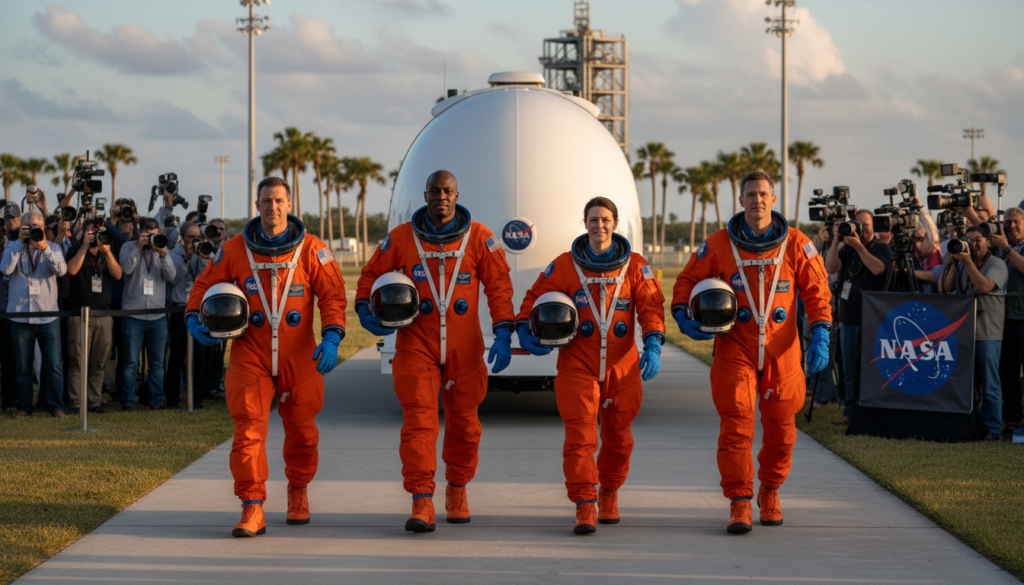
The human element of the Artemis II mission cannot be overstated. The crew comprises three Americans and one Canadian, symbolizing a new era of international cooperation. Commander Reid Wiseman leads the team with a focus on operational precision. Pilot Victor Glover will monitor systems and execute manual control demonstrations. Christina Koch, holding the record for the longest single spaceflight by a woman, brings invaluable engineering expertise.
Representing the CSA, Jeremy Hansen is the first non-American to venture to deep space. His inclusion highlights the strong partnership across the Americas. The CSA has provided key robotics and science contributions, securing Canada’s seat at the table. According to CSA updates, Hansen has completed all mission-specific training simulations and is ready for flight.
The crew is currently at the Johnson Space Center before moving to Florida. Their quarantine is vital to ensure no illnesses travel with them. A common cold in the tight confines of Orion could jeopardize the mission objectives.
Launch Timeline: What to Expect in April
As we approach April, the schedule is tight. The rollout to Launch Pad 39B is imminent. Once the massive SLS rocket is at the pad, teams will perform final connection checks. The launch window in April is dictated by the Moon’s position relative to Earth and required lighting conditions for recovery.
Meteorologists are already analyzing long-range models. While Florida weather is unpredictable, early weather forecasts suggest favorable conditions for the opening of the window. NASA has strict criteria regarding wind shear, precipitation, and lightning potential. If the weather holds, millions are expected to flock to the Space Coast.
The local travel industry is reporting fully booked hotels from Titusville to Cocoa Beach. This resurgence of “launch fever” mirrors the excitement of the 1960s but on a larger scale.
Why This Lunar Flyby Matters
The Artemis II mission is the gateway to Mars. Validating the architecture now is essential for future deep-space habitation. One specific area of study is our home planet. From their vantage point, the crew will observe Earth’s systems, contributing to climate research by photographing atmospheric phenomena from a unique distance.
Culturally, the mission impacts the entire world. It proves that humanity can sustain a presence beyond Low Earth Orbit (LEO). The visual aspect of the mission is also receiving attention. The new Axiom-designed pressure suits, noted for their mobility and modern style, will be worn during launch and reentry. These suits represent a significant upgrade from the bulky Shuttle-era gear.
NASA Administrator Bill Nelson emphasized the gravity of this moment in a recent statement to Reuters, stating that Artemis II is the proof of concept for the next fifty years of exploration. The agency is not just visiting; they are building a highway.
What This Means for the Future
Success in April opens the door for Artemis III, which aims to land astronauts on the lunar South Pole. The data gathered during this flyby regarding radiation protection and navigation is non-negotiable for landing success. Across the US, suppliers and contractors are already bending metal for Artemis III and IV, relying on the green light from this mission.
For detailed technical specifications and live tracking, enthusiasts should follow NASA’s official mission page. The Artemis II mission is more than a flight; it is a test of human resolve and engineering capability.
Final Thoughts
The wait is nearly over. The Artemis II mission is poised to launch in April 2026, marking a pivotal moment in space history. With the crew in quarantine and the rocket prepped, the eyes of the world turn to Florida. This journey will unite nations, inspire a new generation, and prove that the Moon is within our reach once again.