Greenland Tariff Threats: A New Era of Arctic Geopolitics
In the opening weeks of 2026, the global financial markets were rattled by a geopolitical standoff that few had priced in: a threatened trade war between the United States and its closest European allies over the sovereignty of Greenland. The Greenland tariff threats, issued by the second Trump administration, marked a significant escalation in the United States’ long-standing interest in the Arctic territory. While the immediate crisis has been diffused following high-stakes negotiations at the World Economic Forum in Davos, the economic and diplomatic reverberations continue to reshape the transatlantic landscape.
This article provides a comprehensive analysis of the tariff threats, the economic leverage utilized, and the underlying strategic drivers—namely, the race for rare earth minerals and Arctic security—that brought NATO to the brink of an internal trade conflict.
The Ultimatum: 25% Tariffs on European Goods
On January 17, 2026, the geopolitical temperature spiked when the White House issued a direct ultimatum to the Kingdom of Denmark and its European partners. The administration announced that unless Denmark agreed to negotiate the sale or transfer of control of Greenland to the United States, a punitive tariff regime would be implemented. The threat was specific and severe: a 10% tariff on all imports from Denmark, Norway, Sweden, France, Germany, the United Kingdom, the Netherlands, and Finland, effective February 1, 2026.
Furthermore, the administration warned that if a deal was not reached by June 1, 2026, these levies would escalate to a crippling 25% tariff. This announcement sent shockwaves through global markets, causing U.S. stock futures to skid and prompting a sharp sell-off in European equities. The targeted nations, representing some of America’s staunchest NATO allies, issued a joint statement condemning the move as an undermining of transatlantic relations.
The economic stakes were immense. For Denmark alone, the United States is a critical export market, particularly for its pharmaceutical and machinery sectors. According to Reuters, Danish pharmaceutical giants like Novo Nordisk faced potential disruptions that could have cost billions in revenue and increased costs for American patients. The inclusion of major economies like Germany and the UK in the tariff target list signaled that Washington was willing to leverage the entire European trading relationship to secure its Arctic objectives.
The Strategic Pivot: Rare Earths and National Security
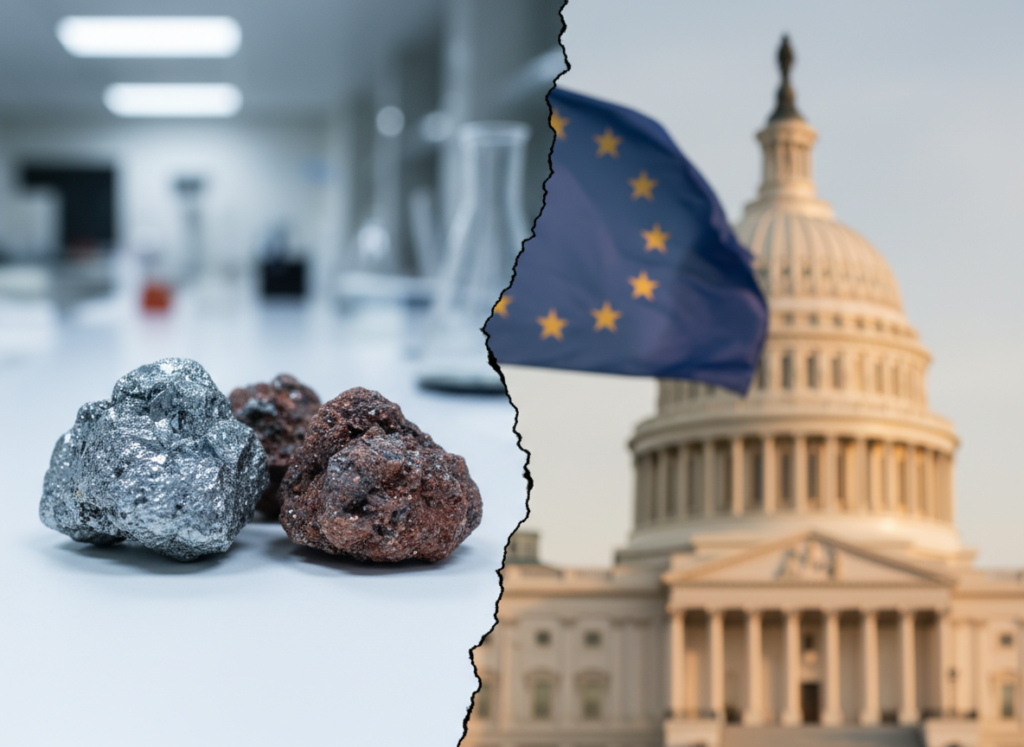
To understand why the U.S. was willing to risk a trade war over an island of 57,000 people, one must look beneath the ice. Greenland is home to some of the world’s largest undeveloped deposits of rare earth elements (REEs), materials critical to modern technology, from fighter jets to electric vehicle batteries. Currently, China dominates the global supply chain, controlling over 90% of rare earth processing.
Breaking the Chinese Monopoly
The U.S. push for Greenland is fundamentally a play for resource independence. Sites like the Kvanefjeld project in southern Greenland contain vast amounts of neodymium, praseodymium, and dysprosium. However, development has been stalled due to local environmental concerns and legislative bans on uranium mining (which often co-occurs with rare earths). By seeking control over the island, the U.S. aimed to bypass these regulatory hurdles and fast-track mining operations to secure a non-Chinese supply chain for its defense industry.
As noted in reports by the Financial Times, the European Union has also been eyeing these resources as part of its own Critical Raw Materials Act. The U.S. move was effectively an attempt to preempt European and Chinese influence over these strategic assets. The administration’s logic was clear: economic coercion via tariffs was a necessary tool to secure national security assets that were otherwise “locked up” by Copenhagen’s reluctance to industrialize the Arctic.
The Davos Breakthrough: A “Framework” for the Future
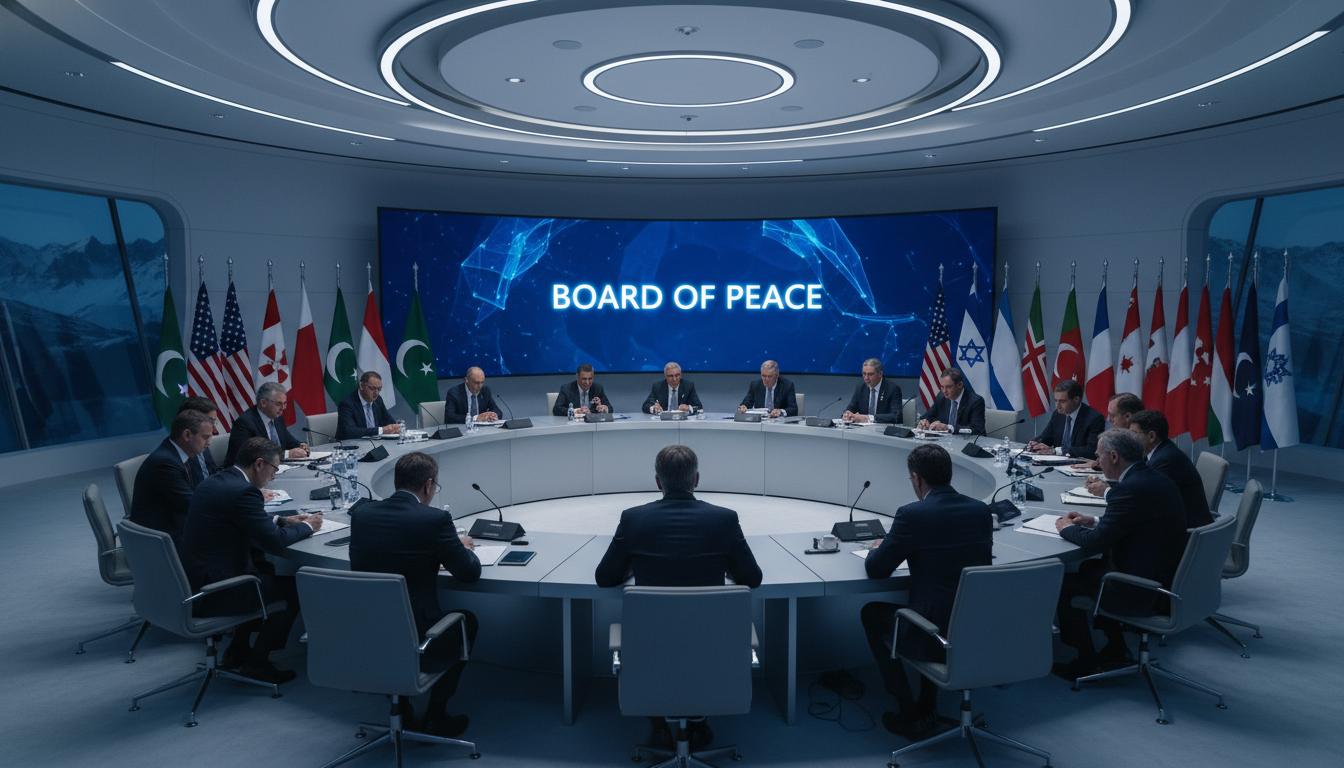
The tension reached its zenith during the World Economic Forum in Davos, Switzerland. European leaders arrived with a prepared package of retaliatory measures estimated at €93 billion, targeting U.S. exports ranging from bourbon to blue jeans. The prospect of a full-scale transatlantic trade war looming over a fragile global economic recovery forced intense back-channel diplomacy.
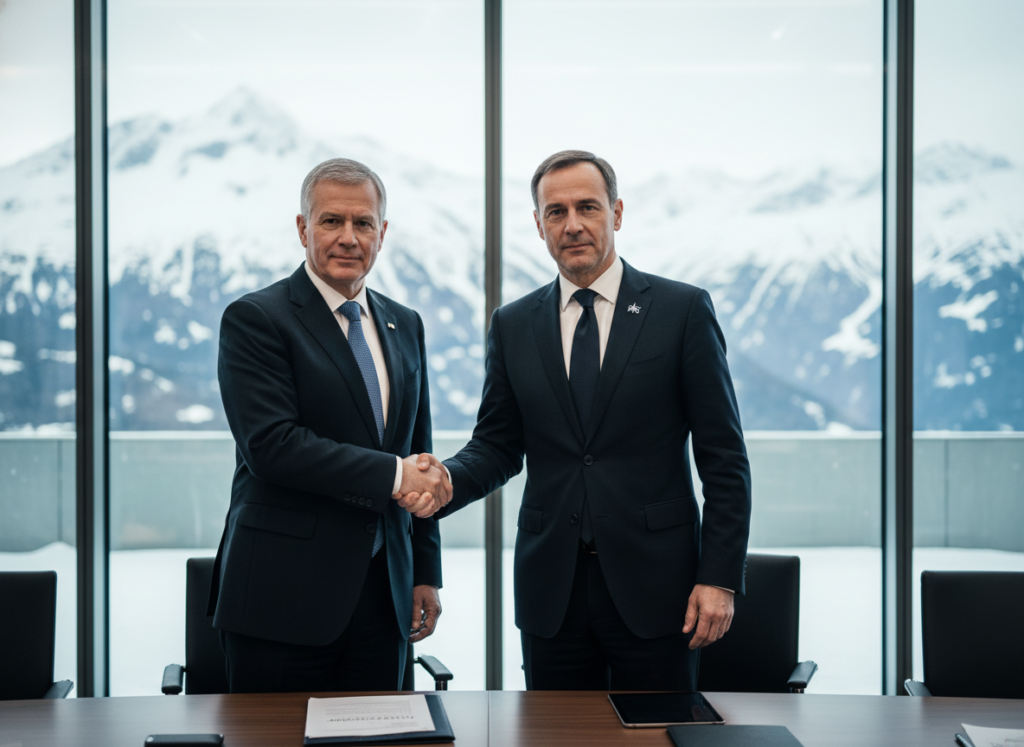
On January 21, 2026, following a meeting with NATO Secretary-General Mark Rutte, President Trump announced a reversal. He declared that a “framework of a future deal” had been reached regarding Greenland and the wider Arctic region. Consequently, the threatened tariffs were suspended indefinitely.
While details of this framework remain sparse, diplomatic sources suggest it involves:
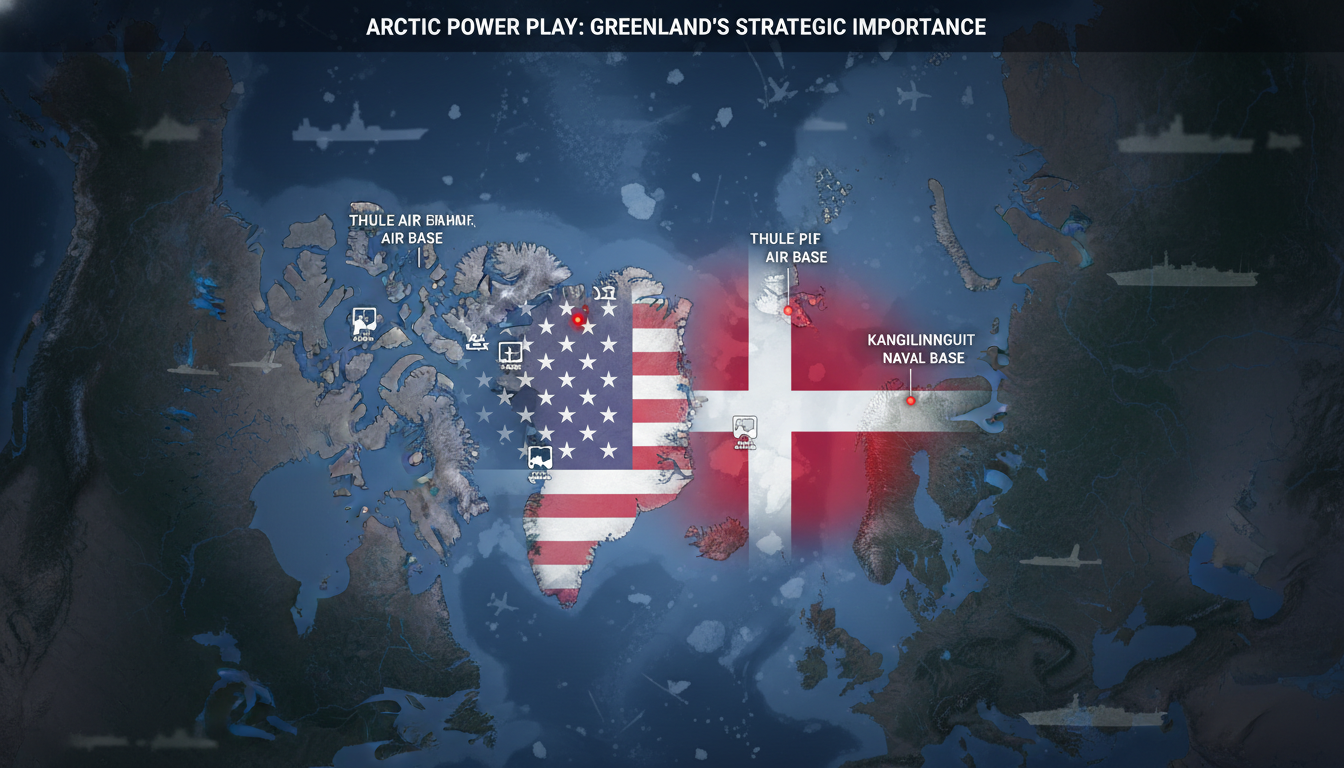
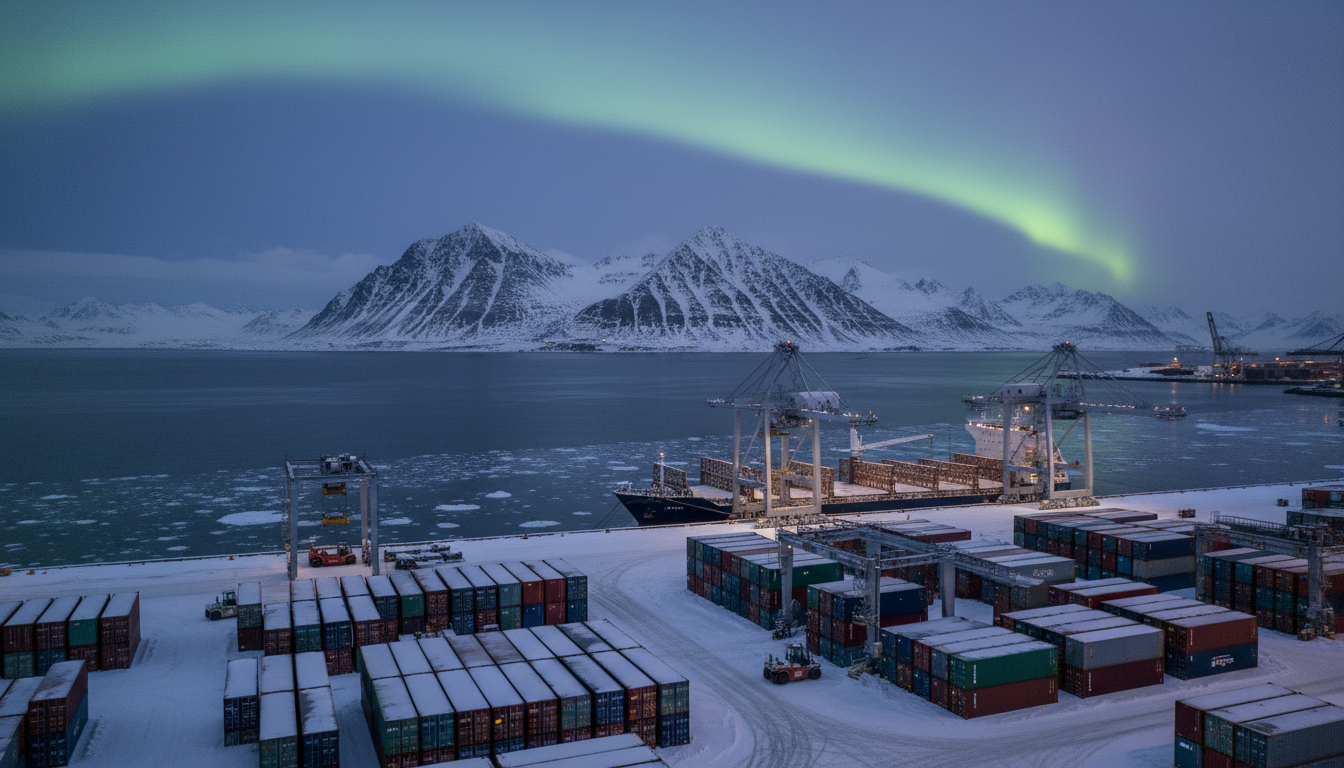
- Enhanced Military Access: Expansion of U.S. rights at the Pituffik Space Base (formerly Thule Air Base) and potential new installations in eastern Greenland.
- Joint Resource Development: A tripartite agreement between the U.S., Denmark, and Greenland to facilitate American investment in mining projects, potentially bypassing some previous regulatory bottlenecks under the guise of “strategic security initiatives.”
- NATO Investment Commitments: A pledge by European allies to increase their financial contributions to Arctic defense, alleviating the U.S. burden in the High North.
Economic Fallout and Market Reactions
Although the tariffs were averted, the episode has left a lasting mark on business confidence. Multinational corporations are now factoring in a higher “geopolitical risk premium” for transatlantic trade. The realization that long-standing alliances offer no immunity against aggressive tariff tactics has forced supply chain managers to rethink their reliance on stable U.S.-EU relations.
Impact on Key Sectors
Pharmaceuticals: The threat highlighted the vulnerability of the medical supply chain. With the U.S. heavily reliant on European drug imports, the 25% tariff threat served as a wake-up call for the healthcare sector regarding political volatility.
Defense and Aerospace: The defense sector breathed a sigh of relief. A trade war would have complicated the supply chains for joint NATO projects, such as the F-35 fighter jet, which relies on components manufactured across the very European nations that were targeted. The resolution likely includes quiet assurances that defense trade will remain insulated from future disputes.
Energy and Mining: The stocks of rare earth mining companies with interests in Greenland saw extreme volatility. Following the “framework” announcement, shares in companies like Energy Transition Minerals surged, anticipating that U.S. involvement will finally unlock the stalled projects in the Kvanefjeld region.
The Inuit Perspective: Sovereignty vs. Security
Amidst the high-level power plays between Washington and Brussels, the voice of the Greenlandic people (Kalaallit) remains pivotal. The government of Greenland, the Naalakkersuisut, has consistently stated that “Greenland is not for sale,” a sentiment echoed by Danish Prime Minister Mette Frederiksen. The proposal of a U.S. purchase was viewed by many locals as a colonial relic, ignoring their right to self-determination.
However, the economic reality is complex. Greenland relies on a block grant from Denmark for more than half its budget. Pro-independence factions argue that developing the mining sector—potentially with U.S. capital—is the only path to financial self-sufficiency and eventual statehood. The Associated Press reported on protests in Nuuk during the crisis, where locals expressed frustration at being used as a pawn in a global power struggle, yet cautiously welcomed the prospect of American investment if it respected local laws.
Future Outlook: An Uneasy Truce
The suspension of the Greenland tariff threats is not an end to the story, but rather the beginning of a new chapter in Arctic relations. The United States has made it unequivocally clear that it views the Arctic as a vital national interest zone, on par with the Indo-Pacific. The “framework” deal will likely lead to a substantial increase in American physical and economic presence on the island over the coming decade.
For global businesses, the lesson is stark: the era of separating economics from security is over. Companies operating in the trans-Atlantic space must prepare for a landscape where tariffs are used not just for economic protectionism, but as leverage for territorial and strategic concessions. As the ice melts and the competition for resources heats up, Greenland will remain at the epicenter of this new geopolitical reality.