In a move that has sent shockwaves through the global economy and the NATO alliance, the United States issued a stark Greenland Tariff Ultimatum in January 2026. This unprecedented geopolitical maneuver links aggressive trade policy directly to territorial acquisition, threatening a trade war with some of America’s closest European allies. As tensions rise between Washington, Copenhagen, and Brussels, the world watches to see if this high-stakes gambit will reshape the Arctic order or fracture the Western alliance.
The ultimatum is clear: the U.S. will impose escalating tariffs on eight European nations unless the Kingdom of Denmark agrees to sell Greenland to the United States. This development marks a significant escalation from previous diplomatic overtures, moving from theoretical discussions of purchase to direct economic coercion.
The Mechanics of the Ultimatum
The specific terms of the threat were delivered via social media and official channels, outlining a strict timeline for compliance. The administration has targeted eight specific nations—Denmark, Norway, Sweden, France, Germany, the United Kingdom, the Netherlands, and Finland—accusing them of obstructing U.S. national security interests in the Arctic.
The tariff structure is designed to apply increasing pressure over time:
- Phase 1: A 10% blanket tariff on all goods imported from the targeted nations, effective February 1, 2026.
- Phase 2: An escalation to a 25% tariff starting June 1, 2026, if no deal for the “complete and total purchase” of Greenland is reached.
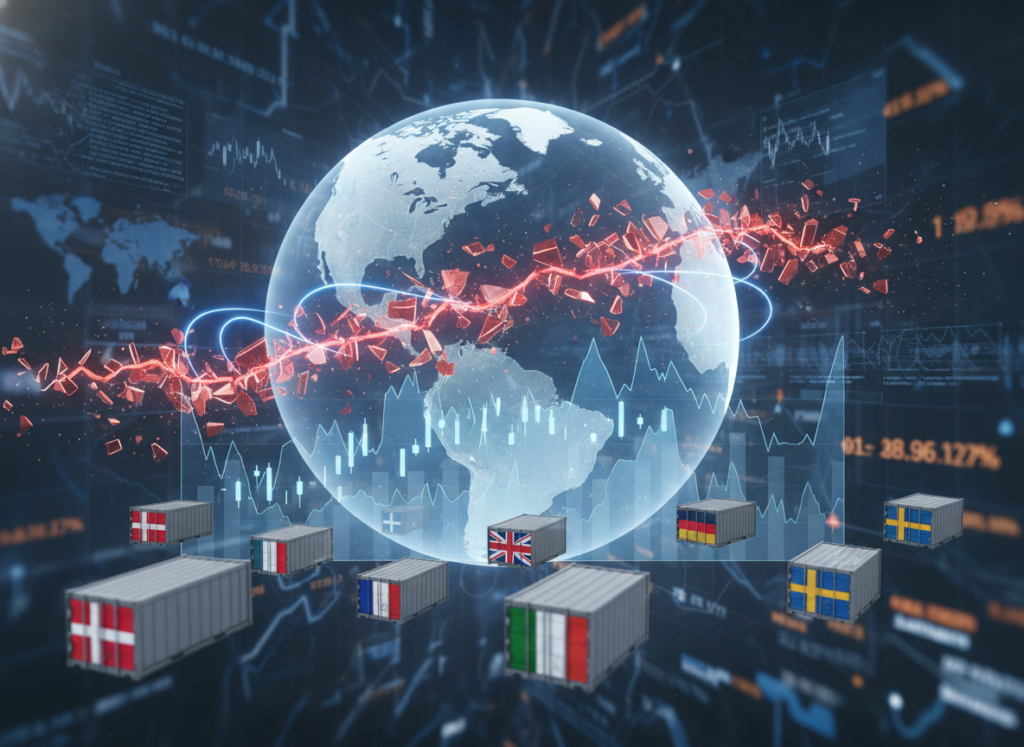
This “pay-to-play” approach to territorial sovereignty has triggered immediate market volatility. The S&P 500 reacted negatively to the announcement, dropping nearly 2% as investors priced in the risk of a protracted transatlantic trade war. For a deeper dive into the specific economic repercussions, financial analysts at CNBC have highlighted the vulnerability of the tech and automotive sectors to these supply chain disruptions.
The Core of the Conflict: Why Greenland?
To understand the severity of the Greenland Tariff Ultimatum, one must look beyond the map and understand the island’s immense strategic value. The U.S. interest is driven by two primary factors: military geostrategy and critical resource control.
Strategic Arctic Dominance
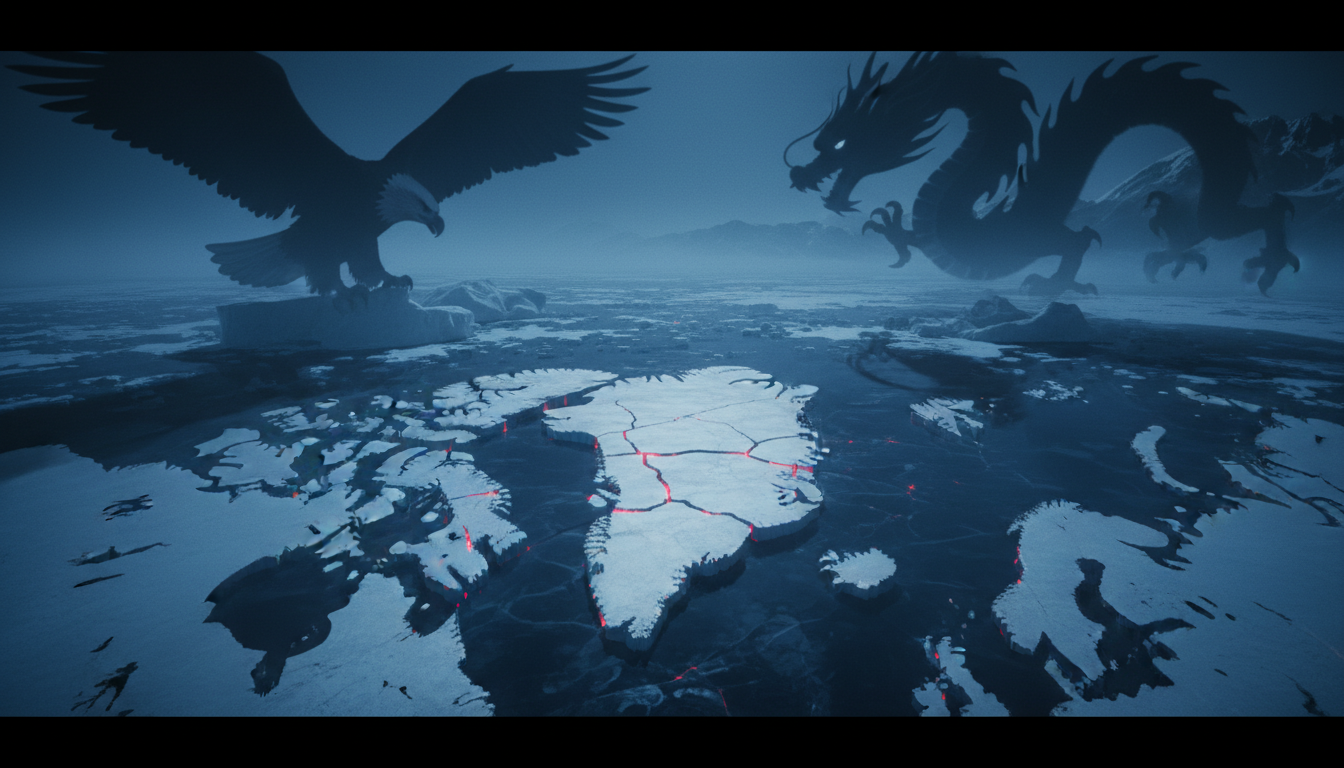
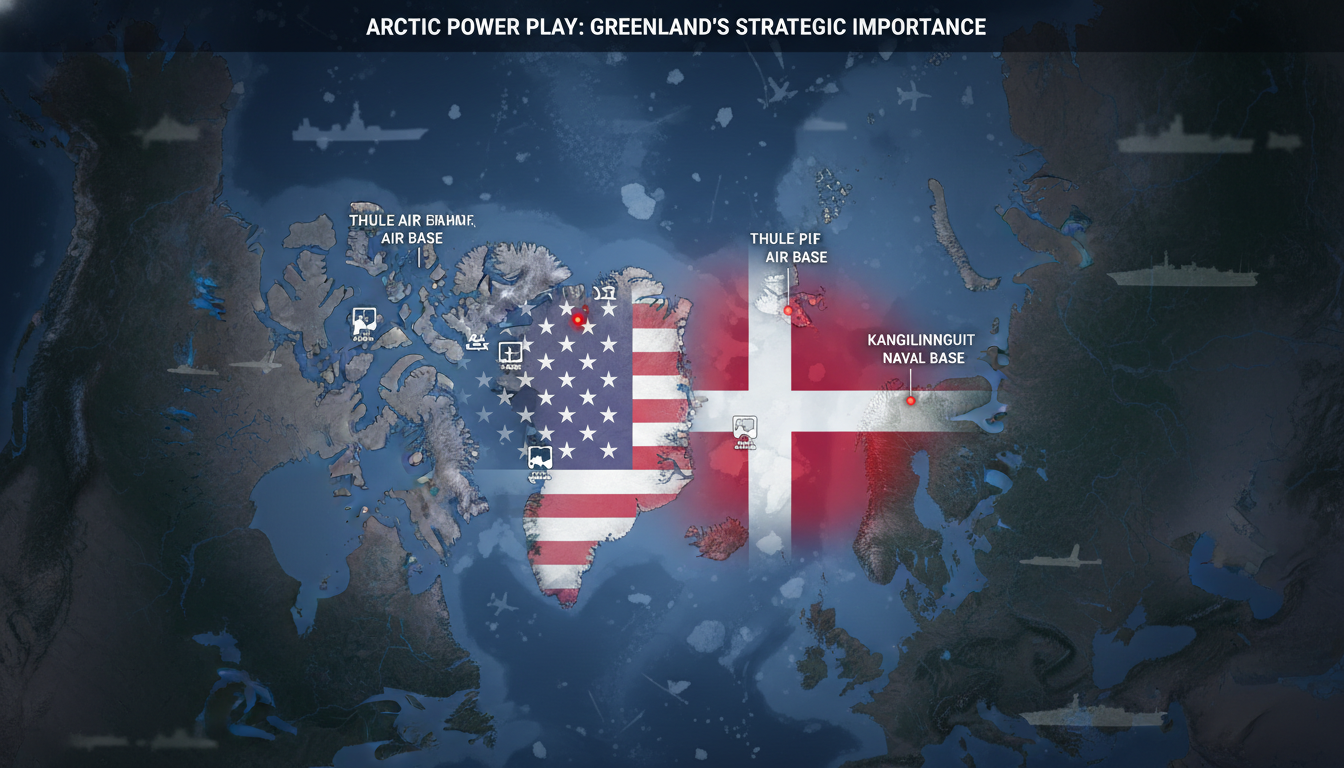
Greenland sits at the gateway to the Arctic, a region becoming increasingly accessible—and contested—due to melting ice caps. The island already hosts the Pituffik Space Base (formerly Thule Air Base), the U.S. Space Force’s northernmost installation. Pituffik is critical for missile warning and space surveillance, acting as the eyes and ears of the U.S. northern flank against potential threats from Russia or China.
However, Washington argues that leasing the base is no longer sufficient. The administration envisions a “Golden Dome” of missile defense systems that requires full sovereignty over the territory to implement without foreign oversight. They contend that an independent or Danish-controlled Greenland is a “security black hole” vulnerable to Chinese infrastructure investment, which could undermine NATO’s Arctic defense posture.
The Rare Earth Resource Race
According to reports from the Guardian, local opposition in Greenland has previously stalled mining projects due to environmental concerns. U.S. officials believe that under American jurisdiction, these projects could be fast-tracked to meet national industrial needs.
International Response and Legal Fallout
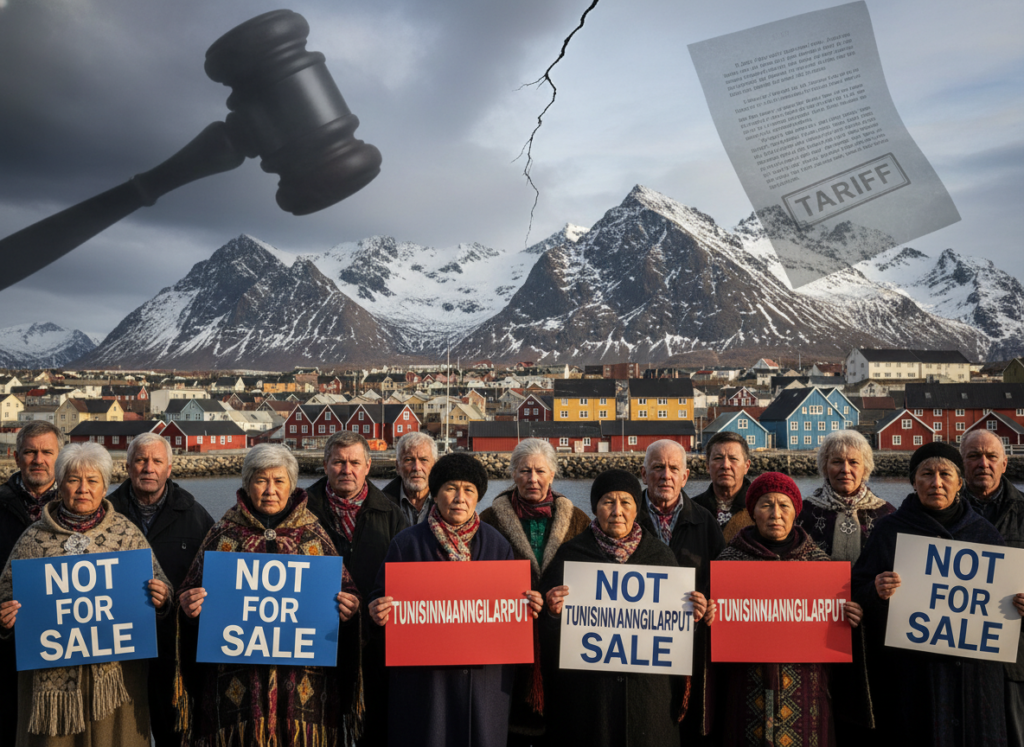
The reaction from Europe has been swift and unified. The Danish government has reiterated its stance that “Greenland is not for sale,” calling the idea of trading territory and people “absurd” in the 21st century. Greenland’s Premier has emphasized that the island serves its own people, not the geopolitical ambitions of superpowers.
The European Union faces a critical test of its Anti-Coercion Instrument (ACI), a policy tool designed specifically to counter this type of economic blackmail. If the U.S. proceeds with the February 1st tariffs, the EU is expected to retaliate with proportionate countermeasures, potentially targeting U.S. agricultural and industrial exports.
The NATO Cohesion Crisis
Perhaps the most dangerous aspect of the Greenland Tariff Ultimatum is its impact on NATO. By targeting key NATO allies like the UK, France, and Norway with punitive tariffs, the U.S. is risking the political unity of the alliance. Military analysts warn that forcing a choice between economic stability and territorial integrity could fracture the coalition at a time when unity is required to counter threats on NATO’s eastern flank.
Legal experts have also weighed in, noting that the purchase of a semi-autonomous territory against the will of its people violates the UN Charter’s principle of self-determination. For more on the international legal framework surrounding this dispute, Chatham House offers extensive analysis on sovereignty and modern statecraft.
Future Outlook: Escalation or Negotiation?
As the February deadline approaches, three scenarios are emerging:
- The Deal: Highly unlikely, but a scenario where Denmark negotiates a new defense treaty that grants the U.S. de facto control without a formal transfer of sovereignty, perhaps in exchange for lifting the tariff threat.
- The Trade War: The U.S. implements the 10% tariffs, and the EU retaliates. This tit-for-tat escalation could drag the global economy into a recession, with inflation rising as supply chains fracture.
- The Standoff: A prolonged period of diplomatic freezing where tariffs remain a looming threat, chilling investment and deepening anti-American sentiment in Europe.
The Greenland Tariff Ultimatum has transformed a long-standing American ambition into an immediate global crisis. Whether this results in a real estate deal of the century or the unraveling of the transatlantic alliance depends on the diplomatic maneuvers of the coming weeks.