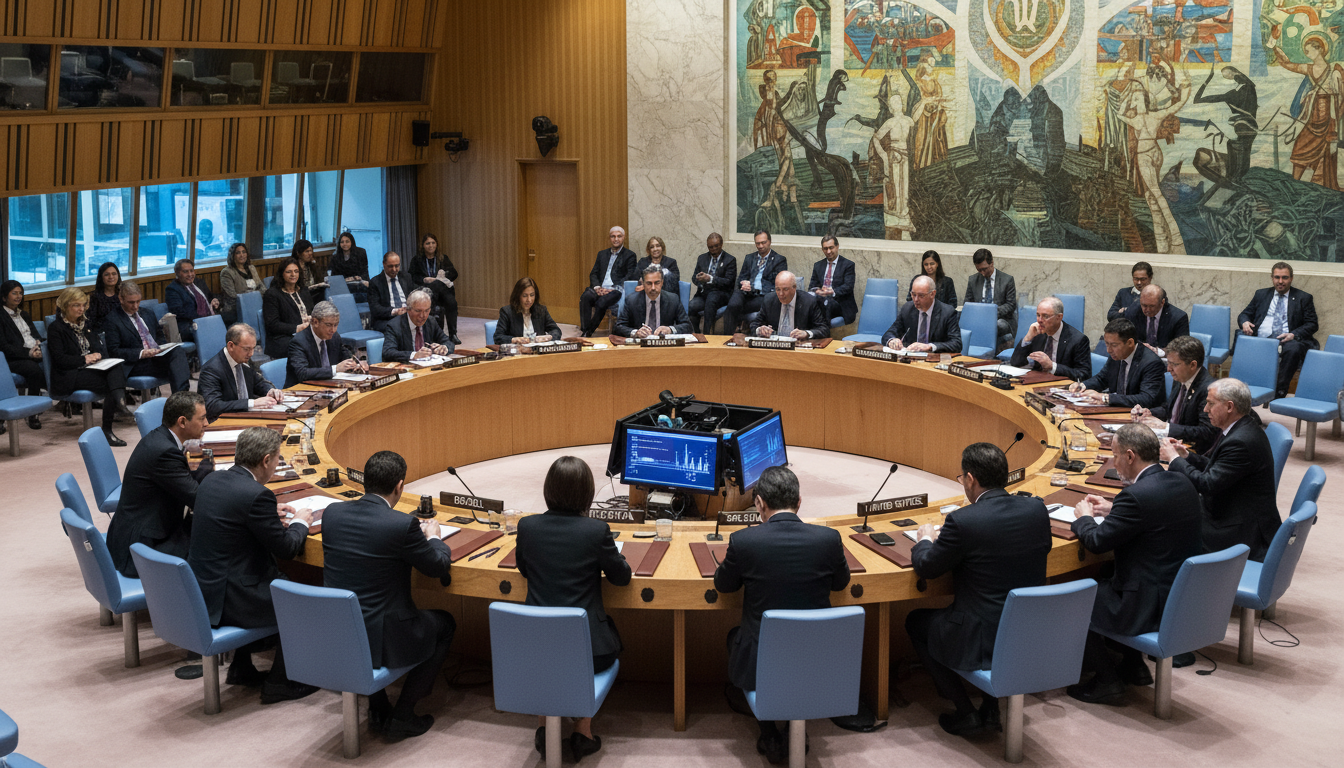
The structure of global governance is under unprecedented strain. At the heart of this tension lies the United Nations Security Council (UNSC), the premier international body charged with maintaining peace and security. Established in 1945, the Council reflects the geopolitical reality of the post-World War II era, not the multipolar world of the 21st century. As conflicts in Ukraine, Gaza, and Sudan expose the Council’s frequent paralysis, calls for UN Security Council expansion have shifted from diplomatic rhetoric to urgent necessity.
For decades, the “P5″—the United States, Russia, China, the United Kingdom, and France—have held the reins of power through their permanent seats and absolute veto rights. However, the legitimacy of a body that excludes major global powers like India, Brazil, and the entire continents of Africa and Latin America from permanent representation is increasingly questioned. The 2024 “Summit of the Future” and the adoption of the “Pact for the Future” have reignited the debate, placing reform at the top of the global agenda.
The Case for Reform: A Relic of 1945?
When the UN was founded, it had 51 member states. Today, it has 193. Yet, the Security Council’s core structure has remained largely unchanged since its inception, save for a modest expansion of non-permanent seats in 1965. This stagnation has created a “crisis of legitimacy.” The current composition fails to reflect the dramatic rise of the Global South, the economic resurgence of Asia, and the political independence of African nations.
Critics argue that the Council’s inability to act decisively on modern crises is a direct result of its outdated makeup. The dominance of the P5 often leads to gridlock, where national interests override collective security. For instance, the UN Charter entrusts the Council with a mandate to protect civilians, yet vetoes frequently block resolutions aimed at ending atrocities. This dysfunction has fueled a growing consensus: for the UN to survive as a credible institution, it must evolve.
Key Players and Competing Proposals
While most nations agree that reform is necessary, the consensus ends there. The debate over UN Security Council expansion is a complex chess game involving rival coalitions, regional power struggles, and deep-seated national interests.
The G4 Nations: A Bid for Permanence
The most prominent coalition pushing for permanent seats is the “Group of Four” (G4): India, Brazil, Germany, and Japan. These nations argue that their economic influence, contributions to UN peacekeeping, and diplomatic weight entitle them to the same status as the P5. The G4 proposes expanding the Council to 25 or 26 members, adding six new permanent seats and four or five non-permanent ones.
India, now the world’s most populous nation and a major economic power, has been particularly vocal. Indian diplomats have repeatedly stated that a Security Council without India lacks credibility. Similarly, Japan and Germany, as top financial contributors to the UN, argue that their exclusion is anachronistic. The G4 nations mutually support each other’s bids, though they have signaled flexibility on the issue of the veto, potentially accepting a 15-year moratorium on using it as new permanent members.
The African Union and the Ezulwini Consensus
Perhaps the most compelling moral argument for reform comes from Africa. Despite being the subject of over 60% of the Security Council’s agenda, no African nation holds a permanent seat. To address this “historical injustice,” the African Union (AU) adopted the Ezulwini Consensus in 2005.
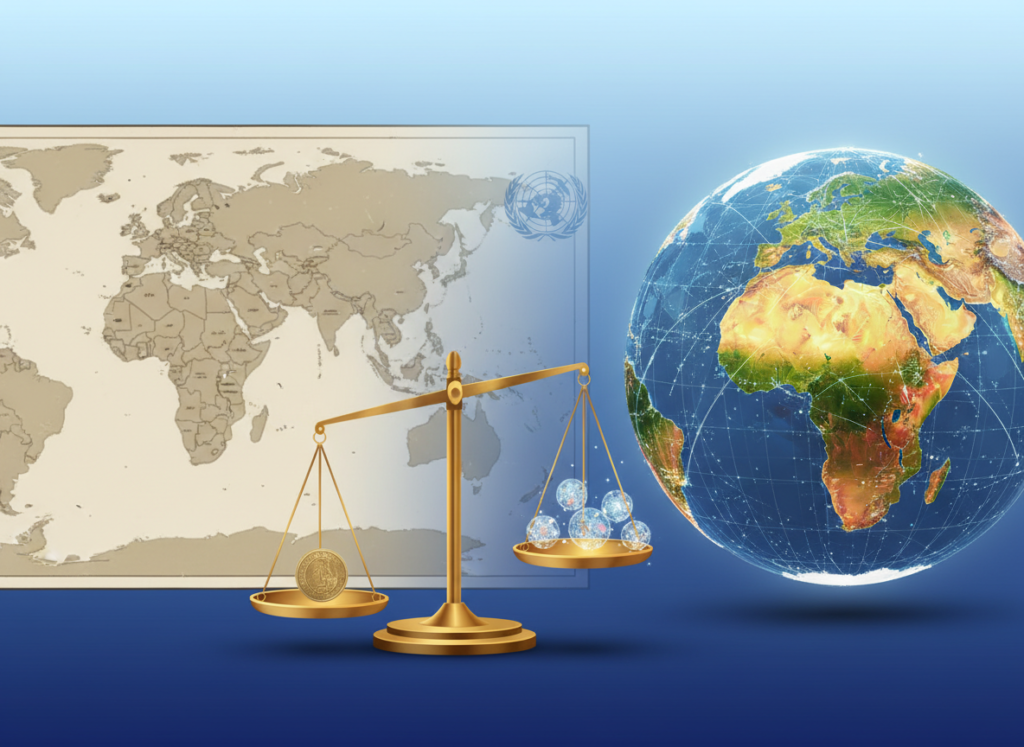
The African position is uncompromising: the continent demands two permanent seats with full veto power and five non-permanent seats. The argument is simple—Africa cannot be a second-class citizen in global diplomacy. However, a significant challenge remains: the AU has yet to decide which specific countries would occupy these permanent seats, with heavyweights like Nigeria, South Africa, and Egypt vying for the honor.
Uniting for Consensus (UfC)
Opposing the G4’s bid for permanent membership is the “Uniting for Consensus” (UfC) group, led by Italy and including countries like Pakistan, Mexico, South Korea, and Argentina. This group argues that adding new permanent members would merely create more centers of privilege and further reduce the Council’s democratic accountability.
Instead, the UfC proposes a new category of longer-term renewable seats. Their model envisions expanding the Council to 26 members by adding only non-permanent seats, which would be elected by the General Assembly. This, they argue, would make the Council more flexible and accountable to the wider UN membership, preventing a scenario where new permanent members become as unaccountable as the current P5.
The Veto Power Controversy
Central to the paralysis of the UNSC is the veto power. Originally designed to keep the great powers at the table, the veto has frequently been used to shield allies and block humanitarian intervention. Russia has been the most frequent user of the veto, often to block resolutions regarding Ukraine or Syria. The United States has also used its veto power significantly, largely to protect Israel from critical resolutions.
Reform proposals regarding the veto range from total abolition (favored by many African and smaller states) to voluntary restraint (advocated by France and Mexico in cases of mass atrocities). The G4 has indicated a willingness to forego the veto initially to secure permanent seats, recognizing that the current P5 are unlikely to dilute their own power by extending the veto to others. The question remains: can UN Security Council expansion be meaningful if new members lack the critical tool that defines true power in the Council?
The Road Ahead: Hurdles and Hope
Achieving reform is procedurally difficult. Amending the UN Charter requires a two-thirds vote in the General Assembly and, crucially, ratification by two-thirds of member states, including all five permanent members of the Security Council. This gives the current P5 a de facto veto over any reform that threatens their status.
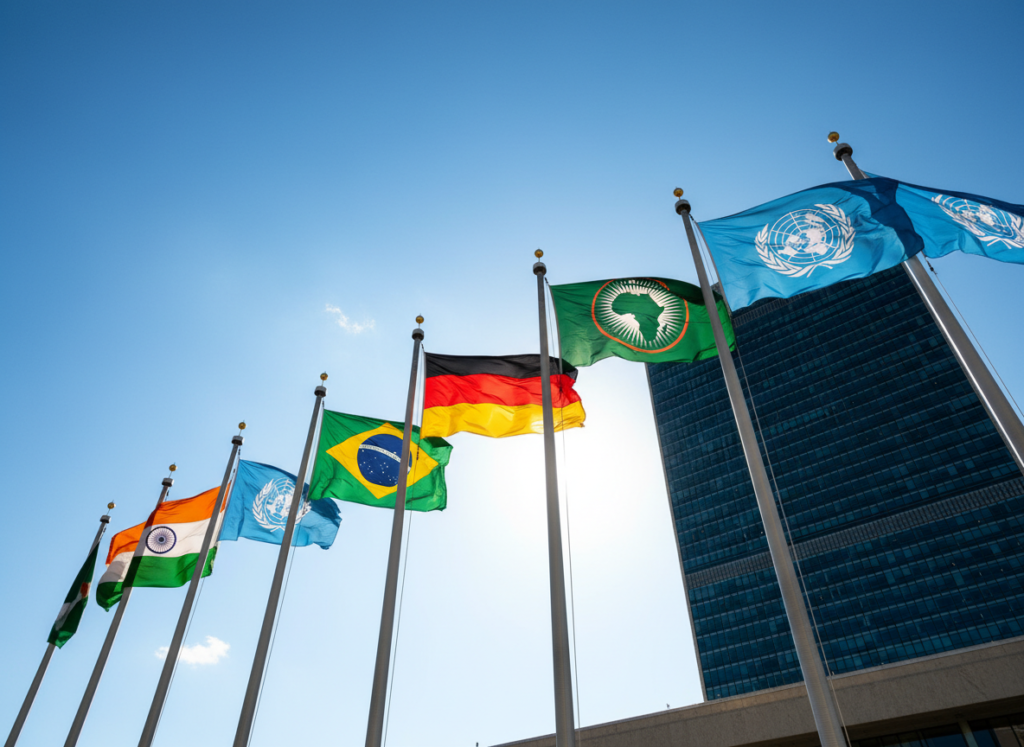
Despite these hurdles, momentum is building. The United States has recently signaled openness to text-based negotiations, a significant shift from decades of stalling. The “Pact for the Future,” adopted by world leaders in 2024, includes specific commitments to make the Council more representative. As detailed in recent analysis by the Security Council Report, the pressure from the Global South is becoming impossible to ignore.
The next few years will be critical. As the UN approaches its 80th anniversary, the choice is stark: reform and adapt to the 21st century, or risk irrelevance as nations seek alternative forums for global governance.
Table of Contents